
Trusts
A Trust ensures your money and property are looked after for the people you care about.
A Trust Overview
A trust is a legal way to protect and manage your assets for the people you care about. With a trust, you can:
- Control how and when your money, property, or other assets are shared
- Provide for children, vulnerable family members, or loved ones
- Plan for future tax efficiency
- Ensure your estate is handled exactly as you intend
Trusts can be set up through your Will or during your lifetime, giving you peace of mind that your legacy is secure.

Family Protection Trust (FPT)
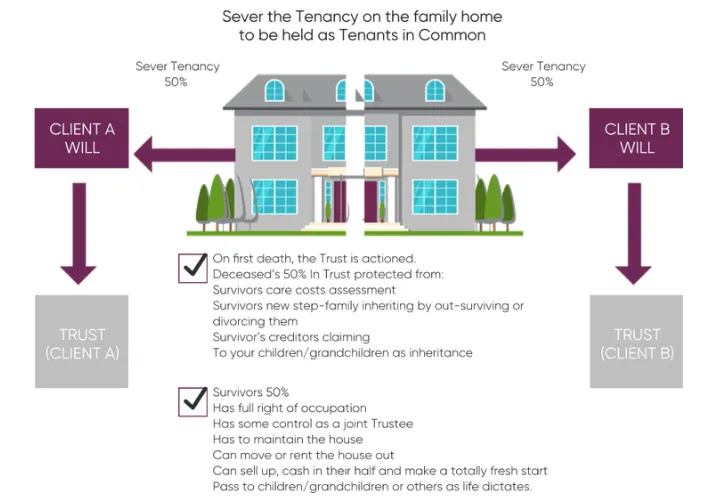
A Family Protection Trust (FPT) provides a much greater level of protection than a standard Will. With standard Mirror Wills for
married couples, the Estate would usually first pass to the surviving partner and then on second death usually to the children. However, if the survivor remarries the house, or savings could be passed to their new spouse and step family, thus risking your children being disinherited.
Alternatively, if this new marriage ends in divorce, the estate could form part of the divorce settlement. A surviving spouse could also be subject to long term care fees or bankruptcy in
the future. If the deceased puts their half share of the estate into a FPT on first death, then that share will be owned by the Trust rather than the spouse/partner outright and is therefore potentially sheltered from the surviving spouse’s long term care fees assessment or bankruptcy, although there are no guarantees about the future.

Vulnerable Person Trust
A Vulnerable Person Trust is a special type of trust designed to protect an inheritance for someone who cannot safely manage money themselves due to a disability, illness, addiction, or other vulnerability.
Instead of receiving the inheritance outright, funds are held and managed by trusted trustees who can use the money to support the person’s needs — such as housing, care, therapies, or quality-of-life expenses — without placing the beneficiary at risk.
Importantly, this type of trust can help preserve eligibility for certain means-tested benefits, as the money is not treated as belonging directly to the vulnerable person. It provides long-term financial protection, professional oversight, and peace of mind that your loved one will always be looked after.

Lasting Power of Attorney
Frequently Asked Questions
Please contact us for more information or to help with specific questions
Question 1: What is a Will Trust?
A Will Trust is a legal arrangement set up through your Will that allows assets to be held and managed by a trustee on behalf of your beneficiaries. It comes into effect after your death and can help protect assets, manage inheritance for minors, or provide for vulnerable family members.
Question 2: Why might I need a Will Trust?
Will Trusts are useful if you want to control how your assets are distributed after your death. For example, you can delay inheritance until a child reaches adulthood, protect assets for a spouse, or ensure a vulnerable relative receives support without giving them full control over the funds.
Question 3: Who manages a Will Trust?
A trustee manages the trust according to the instructions in your Will. This could be a family member, a friend, or a professional trustee. Their role is to act in the best interests of the beneficiaries and ensure your wishes are carried out exactly as written.
Question 4: Can I change or cancel a Trust after making my Will ?
Yes, you can change or cancel a Will Trust at any time while you are alive, but any changes must be made by updating or replacing your Will. Once you pass away, the trust becomes active and cannot be altered. It’s important to review your Will regularly to ensure it still reflects your wishes.
NAVIGATION


© 2026 Secure Wills, All Rights Reserved
Website design by Legal Growth